A Guide for Patients with Eczema and Skin Allergies in Agra
The itch that won’t stop. The red, dry, and inflamed patches of skin that make you feel bad about yourself. The annoyance of not knowing what’s making your skin react. If this sounds like you, you might have eczema or a skin allergy, and you’re not the only one.
These conditions happen a lot, and Agra’s dry winters and humid monsoons can make them worse. It can feel like a guessing game when you try to handle it on your own.
This guide is meant to help you understand. We’ll talk about the differences between eczema and other skin allergies, the things that can make them worse in our area, and the medical treatments that a skin allergy doctor in Agra can give you to help you feel better for good.
What is Eczema (Atopic Dermatitis) and How Does it Make You Itch?
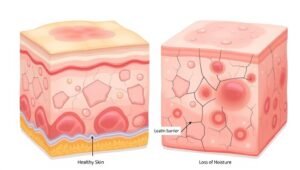
Atopic Dermatitis, also known as eczema, is not just an allergy; it is a long-term condition that weakens the skin’s barrier. Your skin’s outer layer is like a brick wall that keeps moisture in and irritants out. People with eczema have a weak and “leaky” wall. This means:
- Dryness: The skin can’t hold moisture well.
- Itchiness: The dryness and an overactive immune system make the skin itch a lot.
- Inflammation: When you scratch or are around things that cause inflammation, your skin turns red and gets rashes.
Finding Triggers: A Look at Common Skin Allergies in Agra
Eczema is a long-lasting condition, but other rashes happen when you come into contact with an allergen. Contact Dermatitis is what this is called. A doctor who specialises in allergies in Agra can help you figure out what sets off your allergies. Some common causes are:
- Artificial Jewelry: Nickel is a very common allergen in fake jewellery.
- Dyes and Scents for Hair: Paraphenylenediamine (PPD) and other chemicals in hair dye are common triggers.
- Gloves made of Latex.
- Some Plants.
Urticaria, or hives, is another common condition. It looks like raised, itchy bumps on the skin and is often caused by a food, medicine, or insect bite.
How Dermatologists Figure Out What’s Wrong
A good dermatologist is like a private eye.
- A Full History: They will ask you about your work environment, diet, lifestyle, and the soaps and detergents you use.
- Patch Testing: For suspected contact dermatitis, the doctor may do a patch test. Patches with small amounts of common allergens are put on your back. The patches are taken off after 48 hours to see what caused a reaction. This gives a clear diagnosis.
Medical Treatments for Short-Term Relief and Long-Term Control
The goal of treatment is to stop the itching, heal the skin, and stop flare-ups from happening.
Making the Barrier: The Strength of Emollients
-
- This is the most important part of taking care of eczema. To fix the “leaky” skin barrier, a dermatologist will suggest using thick, fragrance-free, medical-grade moisturizers (emollients) a lot and often.
Medicated Creams Can Help Calm The Inflammation
-
- Topical Steroids: Topical steroids work very well to calm down redness and swelling during a flare-up. A doctor will tell you how strong the medicine should be for each body part and how long it should be taken.
- Calcineurin Inhibitors: These are non-steroidal prescription creams that work great on sensitive areas like the face and for long-term use.
Oral Medications for Controlling The Itch
-
- Antihistamines: Your doctor will give you antihistamines that don’t make you sleepy or that do make you sleepy to help you break the cycle of itching and scratching.
Your First Step Towards Relief
It can be tiring to have skin that itches and changes all the time. Getting a correct diagnosis and treatment plan is the most important step in getting back in charge.
Don’t keep your pain to yourself. Please see our comprehensive guide to the best skin and hair doctors in Agra to find a clinical expert who can diagnose your condition and give you long-term relief.